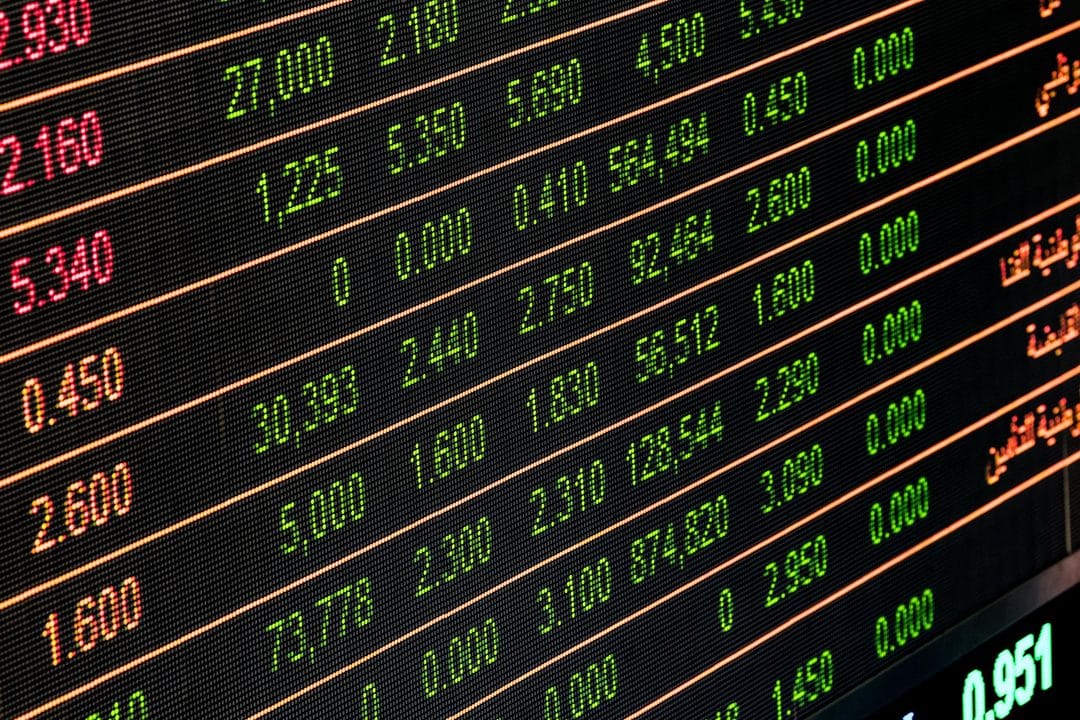
Log into your trading app on a Tuesday afternoon in late July and something feels off before you've even checked a single price. The order book on that small-cap you've been watching is thinner than usual. Your quote takes a beat longer to refresh. And when you finally place the trade, the gap between the buy price and the sell price is wider than it was back in May. None of this is a glitch in the app. It's the London market running on its summer rhythm, and it shows up most years with a regularity that only really becomes obvious once you've traded through more than one July.
Where Everyone Actually Goes in August
Trading desks don't go quiet by accident — the whole industry books its holiday for roughly the same six weeks.
Fund managers, market makers and the institutional desks that generate most daily turnover on the London Stock Exchange scale back through late July and August, and the effect compounds because so many of them do it at the same time. School holidays run through this window across most of Western Europe, year-end reporting cycles have usually just cleared, and the autumn round of results, budgets and central bank decisions hasn't started yet. There's genuinely less news to trade on, which gives desks less reason to stay fully staffed. Retail activity tends to hold up reasonably well through the summer, since app-based investing doesn't require anyone to be sat at a desk in the City, but retail flow is a smaller share of total volume than most people assume. When the institutional side thins out, total daily turnover on the exchange drops with it, and that drop is what everything else in this piece traces back to. This is also where "Sell in May and go away" comes from — a piece of market folklore old enough that versions of it were circulating on the London exchange floor well before electronic trading existed, built on the observation that the six months from May to October have historically delivered weaker average returns than the November-to-April stretch.
Blue Chips Shrug, Small Caps Don't
The summer effect isn't evenly spread across the market, and that's the part investors most often get wrong. A FTSE 100 name like Unilever, Shell or AstraZeneca still trades in enormous size in August — it sits in dozens of index funds and ETFs that rebalance regardless of the calendar, and multiple market makers compete to quote it, so the spread barely moves. Go down the market-cap scale to the FTSE 250, and further still to AIM, and the picture changes fast. Many AIM-listed companies already trade on a single market maker's quote for large stretches of the day even in a busy month; take away half the institutional interest that would normally step in on the other side of a trade, and the book gets noticeably thinner. You'll notice it first in how far the price moves on a trade size that would barely register in April.
Trading hours don't change for the summer — the exchange still opens at 8am and closes at 4.30pm — but the shape of activity inside that window does. The first hour after the open and the last hour before the close usually carry the bulk of the day's volume in any month, because that's when the institutional desks that are actually staffed are placing their orders, and in August the gap between those busy hours and the quiet middle of the day widens noticeably. A dead 2pm on a Friday in August tells you almost nothing about a small-cap's actual prospects. It tells you about the calendar.
What a Widening Spread Actually Costs You
The bid-ask spread is the gap between what a buyer will pay and what a seller will accept right now, and it's effectively a toll you pay for trading immediately rather than waiting. On a liquid FTSE 100 stock trading at several pounds a share, that toll is typically a matter of a few pence — a fraction of one per cent of the share price, and small enough that most investors never think about it. On a thinly-traded small-cap in a quiet August session, the same toll can run to several per cent of the share price, sometimes more if the market maker widens the quote further to protect themselves against being caught out by a large order they didn't see coming. Pay that spread on the way in and again on the way out, and it can quietly erase a meaningful slice of a short-term trade's profit before the underlying share price has moved at all.
Widen the trade size and the maths gets worse, not better, because a bigger order has to work through more of a thin book to get filled, dragging the average execution price further from where the last trade printed. A £500 top-up into a FTSE 100 tracker barely dents the order book. The same £500 aimed at a lightly-traded AIM stock on a slow Wednesday can move the price against you before the order even finishes filling.
Limit Orders Aren't a Nice-to-Have This Month
Use limit orders on small-caps in August, full stop. A market order tells your broker to fill the trade at whatever price is available right now, which is a reasonable instruction on a liquid stock with a tight spread and a deep book, but a genuinely bad one on a thin AIM name where the next available price might sit meaningfully away from the last traded one. A limit order lets you name the price you're actually willing to pay or accept and simply won't execute outside it — worse case, the order sits unfilled until the market comes to you, which on a quiet August afternoon might mean waiting until the following morning. Whether you trade through Hargreaves Lansdown, AJ Bell, Interactive Investor or Freetrade, the limit order function is sitting in the same order-entry screen as the market order, usually one tab away, and it costs nothing extra to use. Skip it on a summer Friday afternoon and you're volunteering to pay whatever the market maker feels like charging that hour.
The same logic applies to stop-loss orders, which convert into ordinary market orders the instant they're triggered. A stop set tight enough to make sense against April's typical daily range can get triggered by a single erratic tick in a thin August book, sell you out at a disappointing price, and then watch the stock drift back up an hour later once real volume returns and the wobble corrects itself. Widening a stop slightly for the summer months, or switching to a stop-limit where your platform offers one, is a small adjustment that avoids being flushed out of a position by noise rather than by any real change in the underlying story.
Momentum Looks Real Until the Volume Isn't
Don't chase a breakout on August volume. A stock that jumps five or six per cent in an afternoon usually means real buying pressure from multiple participants, but in a thin summer market the same move can be produced by two or three trades from a single desk clearing a position, with almost nobody else around to absorb it or push back. The price chart looks identical either way — a sharp move up on rising volume is the textbook definition of a breakout, and most charting software will flag it exactly the same regardless of whether ten institutions are behind it or one retail trader with an unusually large order. Wait a week and it's not unusual to see the whole move give back once ordinary volume returns in September and the price finds its actual level again. That's a frustrating way to lose money, because everything about the setup looked correct at the time.
The "Sell in May" Adage — Real Effect, Bad Trading Rule
Here's the tension worth sitting with: the underlying liquidity pattern behind "Sell in May and go away" is genuinely well documented, but the adage itself performs poorly as a mechanical trading rule. Selling every May and buying back every October, year after year, means paying two rounds of trading costs annually, sitting in cash (or bonds) through a period that isn't reliably weak — plenty of individual years have delivered strong summer gains that would have been missed entirely — and getting the re-entry timing wrong just as often as getting it right. The seasonal liquidity effect and the seasonal returns effect are related but not the same thing, and conflating them is where a lot of retail investors talk themselves into a bad decision. Thinner volume and wider spreads in summer are structural and mechanical, tied directly to fewer traders being active on any given day. Weaker average summer returns, on the other hand, is a statistical pattern built from many different years with very different underlying causes, and a pattern that holds on average across decades still fails in a large minority of individual years — which makes it a poor basis for timing your own, much shorter, investing horizon.
What This Means for Your Own Portfolio This Summer
None of this is a reason to stop trading or to panic about a temporarily wider spread on a stock you already hold for the long term — if you're not selling this week, a wider August spread on a company you plan to own for years is background noise. It does mean treating trade timing and order type as genuinely different decisions for a FTSE 100 holding versus an AIM small-cap. Check the spread before you place anything on a thinly-traded name, not after. Split a large order into smaller pieces if you're trading something illiquid, rather than posting the whole size at once and eating whatever price the book gives you. And if a small-cap you're watching suddenly moves hard on a Tuesday afternoon in August, ask where the volume actually came from before you decide it means anything. September will tell you soon enough whether it was real.