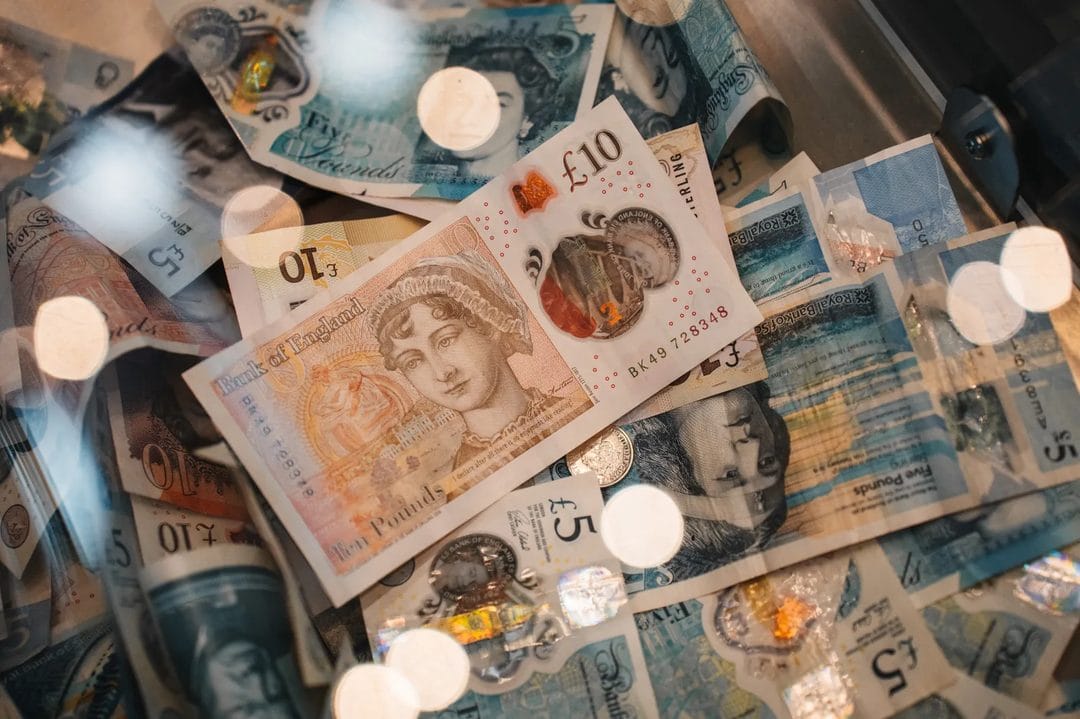
Check a global index tracker on a day when sterling has jumped hard against the dollar, and something odd shows up: the fund can sit flat, or even dip, while almost every share it holds has closed higher in its own local currency. Nothing has gone wrong with the fund. The manager hasn't made a bad call, and the underlying companies haven't had a poor day. What's happened is simpler and far more mechanical than most investors realise — the pound in your pocket has become worth more dollars, so each dollar of gain inside the fund now translates back into fewer pounds. That translation step, invisible on most fund platforms until you go looking for it, is currency risk, and it sits underneath a huge share of what UK investors hold once they move beyond the FTSE 100.
What currency risk actually is when you buy a share priced in dollars
Every time you buy a US stock, or a global fund with heavy US weighting, you are making two separate bets whether you intend to or not. The first is on the company or the index itself — will Microsoft's earnings grow, will the S&P 500 keep compounding. The second, layered underneath without asking your permission, is a bet on GBP/USD: will the pound be stronger or weaker against the dollar when you eventually sell than it was when you bought. Your platform statement shows one number, the total return in pounds, but that number is really two numbers multiplied together, and most of the time investors only ever see the combined result.
This matters more than it sounds, because the two bets don't move together in any reliable way. A US company can deliver a genuinely strong quarter and see its share price climb eight or nine percent in dollar terms, only for a sterling rally over the same stretch to wipe out most of that gain by the time it's converted back. The reverse happens just as often — a mediocre US market showing propped up into a decent UK-currency return purely because the pound weakened while you were holding. Neither outcome has anything to do with stock-picking skill. It's currency doing what currency does, which is move for reasons that are largely unrelated to the earnings of any individual company you own.
Why a strong pound doesn't feel like good news at the time
A stronger pound is good news for your next holiday and your next Amazon.com order, but it is a headwind for existing holdings in US or global funds you already own. This is the bit that catches people out, because everything in daily life tells you a strong pound is positive — cheaper imports, cheaper trips abroad, a stronger-feeling currency generally reported as good economic news. Your portfolio doesn't read the news that way. If you're holding an unhedged S&P 500 tracker and sterling strengthens meaningfully against the dollar over a run of months, you can watch your fund underperform the actual US market by a noticeable margin, purely on the translation.
The direction that actually helps unhedged dollar holdings is a weaker pound, which is the opposite of what feels intuitively "good" for the UK economy. That's the contradiction worth sitting with for a second: the currency move that flatters your portfolio statement is usually the same one making your weekly shop and your next US subscription bill more expensive. There's no way around this tension for anyone holding dollar-denominated assets from a sterling base — you're structurally exposed to it the moment you buy, and no amount of stock selection inside the fund changes that exposure.
Hedged vs unhedged share classes: what the label on the fact sheet means
Most large fund providers now offer the same underlying strategy in two flavours, and the difference lives entirely in that one word on the fact sheet. Take iShares Core S&P 500, or Vanguard's S&P 500 UCITS ETF — both are available as a standard unhedged share class, where your return is the US market return plus or minus whatever GBP/USD did over the holding period, and as a GBP-hedged share class, where the fund uses currency forward contracts behind the scenes to strip most of that currency movement out. Buy the hedged version and you get something much closer to the pure US market return in local-currency terms, regardless of what sterling does against the dollar in the meantime.
That sounds like a straightforward improvement, and for some investors it is. But hedging isn't free, and it isn't perfect. The fund has to continuously roll forward contracts to maintain the hedge, and that has an ongoing cost embedded in the share class's charges — usually a modest addition to the ongoing charge figure compared with the unhedged version of the same fund, though the exact gap varies by provider and by how volatile the currency pair has been. On top of the direct cost, hedging only ever offsets the currency component precisely for major, liquid pairs like GBP/USD or GBP/EUR; hedge a fund with broad emerging-market exposure and the hedging is cruder, because forward contracts on some of those currencies are thinner and more expensive to maintain.
When the hedge quietly costs you instead of protecting you
Here's the part providers don't put on the front page of the factsheet: currency hedging can lose you money in a period when the pound weakens, because you've paid to strip out a currency move that would have worked in your favour if left alone. A hedged US fund held through a stretch of sustained sterling weakness will lag its unhedged sibling by roughly the full extent of that currency move, on top of the small drag from the hedging cost itself. Hedging isn't insurance against loss — it's a tool that removes currency as a variable altogether, for better and for worse, and anyone buying a hedged share class purely because it sounds "safer" hasn't actually understood what it does.
Do you actually need to hedge? For most long-term ISA holdings, no
For a long-term ISA holding built around a global tracker or an S&P 500 fund, stick with the unhedged share class. Over a genuinely long horizon — ten, fifteen, twenty years — currency swings tend to average out in a way that a single bad quarter never will, and the unhedged version is almost always cheaper, simpler, and easier to hold without second-guessing yourself every time sterling moves. The case for hedging strengthens considerably for shorter time horizons: money you're likely to need in the next two or three years, or a fixed income allocation where the whole point of the holding is currency-free stability rather than growth, is where paying for a hedge starts to make genuine sense.
- Long-term ISA growth holdings (10+ years): unhedged is the better default — lower cost, and time smooths the currency swings.
- Money earmarked for a near-term goal, or bond-like holdings meant to behave predictably: a hedged share class earns its keep here.
- Investors who already hold significant unhedged dollar exposure through a workplace pension or other accounts should check their total picture before adding more of the same risk through an ISA — and vice versa, among other portfolio-level checks worth running before choosing either way.
Practical ways to manage currency exposure without switching to a hedged fund
You don't have to pick between "fully hedged" and "ignore the problem entirely." The most straightforward lever is simply diversifying which currencies you're exposed to in the first place — a portfolio split across a UK equity income fund, a European tracker, and a US or global fund isn't leaning on a single GBP/USD outcome the way an all-US portfolio is, because the currencies involved don't all move together. Some UK-listed multinationals also give you indirect dollar exposure through their overseas earnings without you ever buying a US-domiciled fund, which is worth remembering if you already hold names like Diageo, AstraZeneca, or Unilever inside a UK equity allocation.
Time horizon does more of the work than most people give it credit for, too. A twenty-year-old opening their first Stocks and Shares ISA with a global tracker has decades for currency swings to wash through, and worrying about this year's GBP/USD level is close to noise against that timeframe. Someone drawing down a SIPP in the next few years, by contrast, has a much stronger case for either hedged exposure or simply holding more in sterling-denominated assets as the pot approaches the point where it needs to be spent. Match the tool to the timeframe rather than picking a hedging stance once and applying it to every account you own.
The one question worth asking before you buy any global fund
Before adding a US or global fund to a portfolio, look up which share class you're actually being shown — platforms don't always default to the one you'd assume, and the difference between "IUSA" and "SUSG" hidden in an ETF ticker can be exactly this hedging distinction. Read the factsheet's "share class" or "hedging" line rather than trusting the fund's headline name, because two versions of the same underlying strategy can carry meaningfully different risk profiles despite tracking the identical index. It takes thirty seconds to check and it changes what kind of bet you're actually making every time sterling moves.