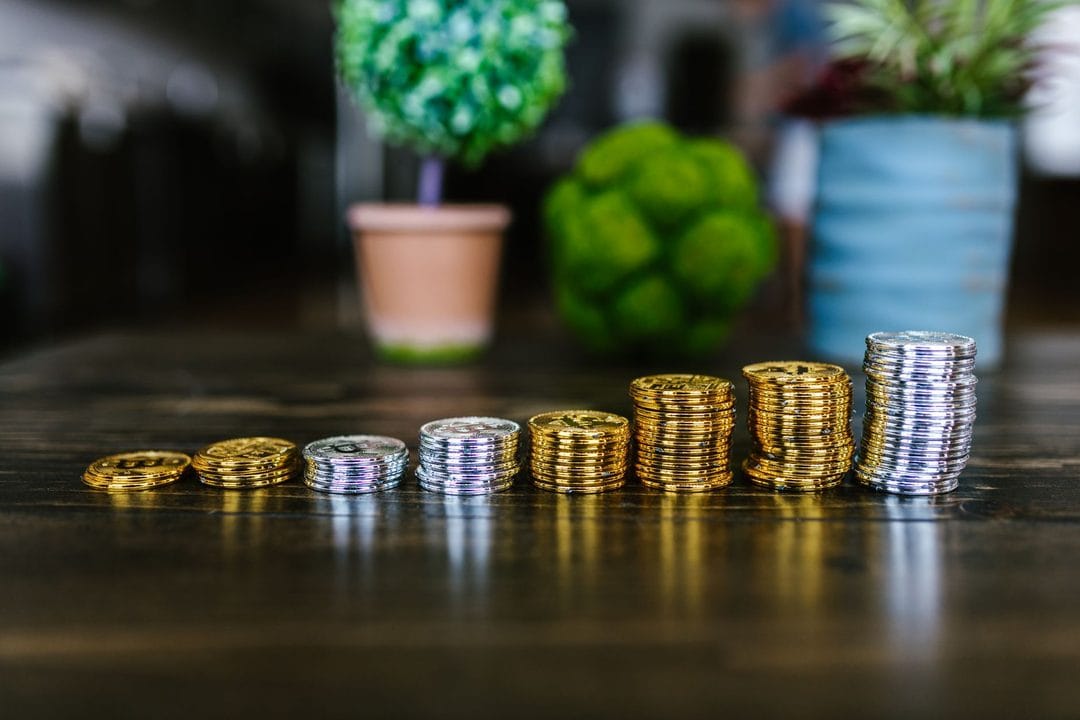
Open a spreadsheet, enter £200 a month and a 5% annual return, then drag the formula down twenty years. The first few rows barely move. After ten years you have paid in £24,000, and the balance sits at roughly £31,000, which looks like a lot of effort for a modest reward. Then the curve bends. By year twenty the pot is around £82,000, and your own contributions account for only £48,000 of it. The 5% assumption is illustrative, before fees and tax, and it is not a forecast. Even so, the gap between what you pay in and what you end up with is the whole point of compound interest, and most people underestimate it because the early years look so unremarkable.
What compounding actually does each year
Compounding means you earn a return on last year's return, not just on the money you put in. In year one, your balance grows from nothing to about £2,400 of contributions, and the investment return on that money is only around £60. It feels trivial because it is. The important bit is that every pound of that £60 stays invested and starts earning its own return the following year. Over time the return begins to outpace the contributions. In year twenty, the growth alone is roughly £3,900, which is more than the entire £2,400 you paid in during year one.
The mechanism is simple, but the numbers surprise people because they are not linear. Doubling your time horizon does not double your result. Ten years at £200 a month produces about £31,000, but twenty years produces about £82,000, not £62,000. The last ten years add more than the first ten, even though you contributed exactly the same amount each month. That is the feature that separates a patient saver from someone who stops after five years and concludes that investing does not work.
Why the first decade feels slow
The early years are flat for a structural reason, not because the maths is wrong. Your balance is small, so each year's return is small in pounds terms, and the eye tracks pounds, not percentages. A 5% return on £5,000 is £250, which sounds reasonable until you compare it with the £2,400 you contributed that year. Most people look at their platform app once a month, see a change of a couple of hundred pounds, and assume the investment is not doing much. The mistake is judging the strategy by the early snapshot rather than the trajectory.
The other reason is that the early phase is when you are most likely to interrupt the process. Money gets withdrawn for a car, a holiday or a sudden repair. Once that happens, the compounding base is reset, and the years you lose are the years that would have done the heavy lifting. Keeping an emergency fund in a separate cash account means your investments can stay untouched while life happens.
The flat start is also where your savings habit is built. Setting up a monthly transfer that you never see is the simplest way to keep contributing through the slow years, and it works better than relying on willpower each month. Treat the first decade as the cost of admission, not as evidence that the approach is failing.
One practical fix for the flat-start problem is to track two numbers rather than one. Record your total contributions in one column and your total growth in another, and look at the growth column once a year instead of the balance every week. The balance mixes your own savings with market movement, so it tells you little about whether the plan is working. The growth column tells you what the money is actually doing, and in the early years it is usually a small, steady figure that gradually becomes harder to ignore.
Fees compound too, and they work against you
Who gets the first slice of your return?
Charges follow exactly the same mathematics as returns, only in reverse. If your investments return 5% gross but the total ongoing cost is 1% a year, you are compounding at 4%. Run the same £200 a month for twenty years at 4% and you end up with roughly £73,000, which is about £9,000 less than the 5% version. That £9,000 is not a penalty for one bad year. It is the cumulative effect of a small percentage taken every single year.
This is why the ongoing charges figure, usually shortened to OCF, matters more than almost any other number in a fund factsheet. Check it before you check the past performance, because past performance tells you what happened, while the OCF is a cost you will pay every year whatever happens next. Platform fees, dealing charges and fund charges are separate lines, and they all stack. Add them up for your actual holding, not for a sample portfolio in a brochure. Index funds and ETFs typically have lower charges than actively managed funds, and that gap widens over decades, although it is not a guarantee of better returns.
Here is the recommendation I would make to almost anyone starting out. Before you pick a fund, find out the total annual cost of your holding, including the platform, and set a ceiling for it. If you cannot explain where each percentage goes, you are probably paying more than you think.
The trade-off: returns do not arrive in a straight line
The compounding illustration assumes a steady 5% every year, and real markets do not behave like that. Some years will return 15%, others will lose 20%, and the average can look fine on paper while the experience is unpleasant. The order of those returns matters more than most people expect. A poor run early in your investing life can leave you behind a saver with the same average return but a better sequence, because the losses hit a larger pot relative to what you have contributed. This is sometimes called sequence risk, and it is a real effect, even if it is smaller for someone who keeps contributing.
There is a counterpoint, and it is worth taking seriously. If you are still contributing during a fall, your monthly £200 buys more units at lower prices, which can help the long-run result. Someone who stops contributing in a downturn, or sells in a panic, locks in the loss and loses that benefit. Whether you find this reassuring or infuriating depends on your temperament and how far you are from needing the money. A 25-year-old with a long horizon can usually afford to tolerate volatility. Someone planning to buy a house in three years cannot, and should keep that money in cash rather than hope the sequence works out.
How wide the range really is
A single 5% line in a spreadsheet hides how much the answer depends on the return you assume. Keep the same £200 a month over the same twenty years and change only the annual return. At 3%, the pot grows to roughly £66,000 from the same £48,000 of contributions. At 7%, it reaches about £104,000. Those three outcomes differ by almost £40,000 without any change in how much you saved, which is why the return assumption deserves more caution than the contribution figure. Nobody can tell you which of the three will happen, and a well-diversified portfolio over two decades could land anywhere in that band or outside it. What you can control is the contribution rate, the cost you pay, and how long you stay invested. Those three levers move the outcome more reliably than any attempt to predict the market. If you want a safer test, run the spreadsheet at 3% and ask whether you would still be happy with the result. If the answer is yes, the plan is robust. If the answer is no, raise the monthly amount or extend the timeframe rather than hoping for a better return.
Practical steps that let compounding work for you
Most of the benefit comes from a short list of habits rather than from clever stock selection. The steps below are the ones I would prioritise, in roughly the order that matters.
- Set up an automatic monthly contribution on payday, so the money leaves your current account before you can spend it.
- Hold the investments inside a Stocks and Shares ISA, where the growth and dividends are free of UK income tax and capital gains tax, subject to the annual £20,000 allowance.
- Choose accumulation units or a fund that reinvests income automatically, so dividends join the compounding base rather than sitting in cash.
- Check the total cost each year, and move platform or fund if the charges have crept up without you noticing.
- Avoid selling during a fall, and remember that a few years of sluggish returns are normal in a long plan.
None of these steps requires forecasting markets, and that is their main advantage. You are not betting on a particular company or a rate decision, only on the arithmetic of time and regular contributions. The list is also deliberately dull, because the dull habits are the ones people actually keep doing for twenty years.
Set the standing order for the first working day of next month, then delete the app from your home screen for a while. The spreadsheet will keep working, quietly, long after the novelty has worn off.